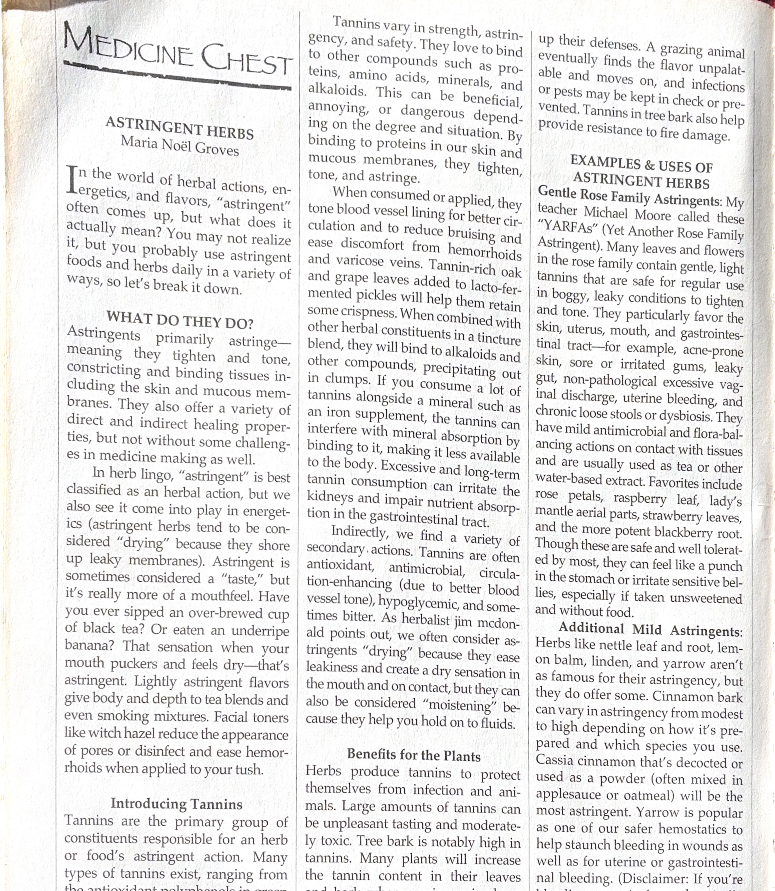
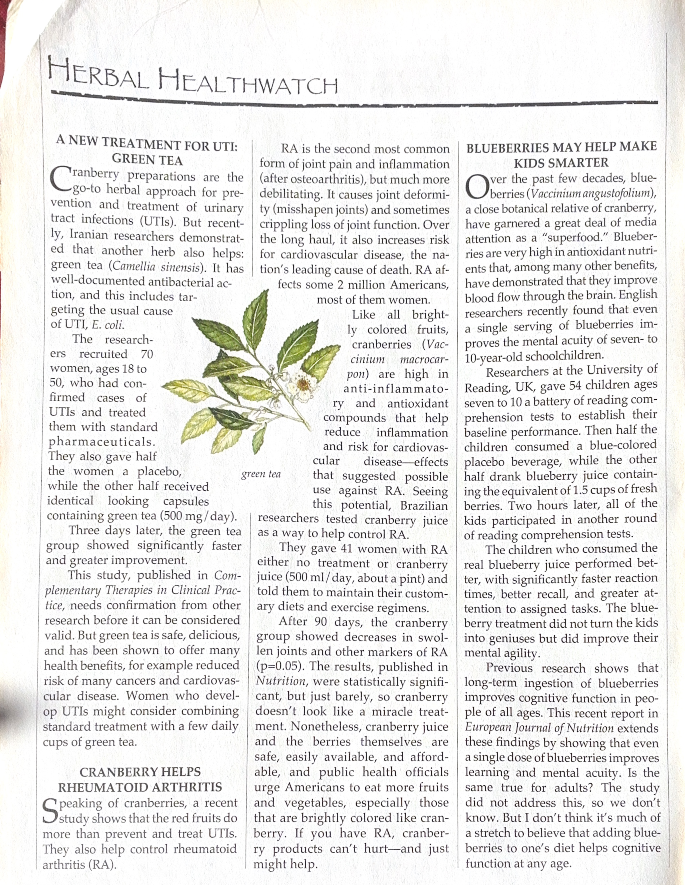
This article by herbalist Maria Noël Groves clearly explains the herbal action of astringency—what it is, how it works, why it’s useful, and which herbs to choose. Astringents tighten and tone tissues (skin, mucous membranes, blood vessels), reduce leakiness, and give a puckery “dry” mouthfeel (think strong black tea or unripe banana). They are considered “drying” yet can also help the body hold onto fluids.
Key Mechanism: Tannins Tannins are the main compounds responsible. They bind to proteins, minerals, and other substances, which produces the toning effect. Benefits • Tone blood vessels (less bruising, help hemorrhoids & varicose veins) • Antimicrobial and antioxidant • Help keep lacto-fermented pickles crisp • Mildly anti-inflammatory and circulation-enhancing
Cautions • Can bind to iron or other minerals and reduce absorption • Excessive or long-term use may irritate kidneys or gut • In tinctures they can precipitate out (clumps) • Potent tannins are not safe for long-term internal use
Benefits for the Plants Tannins protect plants from infection, grazing animals, and even fire. Plants ramp up tannin production when threatened.
Examples & Uses of Astringent Herbs
- Gentle Rose-Family Astringents (“YARFAs”) Safe for daily use. Rose petals, raspberry leaf, lady’s mantle, strawberry leaf, blackberry root. Best for: acne-prone skin, sore gums, leaky gut, excessive vaginal discharge, uterine bleeding, chronic loose stools. Usually taken as tea or water-based extracts.
- Additional Mild Astringents Nettle leaf/root, lemon balm, linden, yarrow, cinnamon (especially cassia when decocted). Yarrow is a gentle, safe hemostatic for wounds or mild uterine/GI bleeding (but see a doctor for heavy or unexplained bleeding).
- Polyphenol-Rich Astringents (antioxidant “superfoods”) Berries, pomegranate, hibiscus, grape seed, pine bark, hawthorn, green tea (EGCG), cacao, purple fruits/vegetables, lemon balm. Safe and beneficial long-term for fighting inflammation and oxidative stress. Note: extracts can darken or form clumps over time.
- Potent Circulatory Astringents Horse chestnut, witch hazel, oak bark (and milder oak leaves). Topical use only(except specially standardized horse chestnut extracts): tone varicose veins, hemorrhoids, vascular insufficiency; disinfect wounds; soothe bug-bite itch. Not recommended for long-term internal use due to potential toxicity and GI/kidney irritation.
Overall Takeaway Astringent herbs are everyday, accessible tonics that tighten leaky or weak tissues. Choose gentle ones (rose family, nettle, yarrow) for internal use and save the stronger ones (witch hazel, oak, horse chestnut) for topical applications. They are generally safe when used appropriately, but always check with a healthcare provider for heavy bleeding, mineral deficiencies, or long-term use. The article emphasizes practical, low-risk ways to incorporate astringents into teas, toners, and first-aid routines.
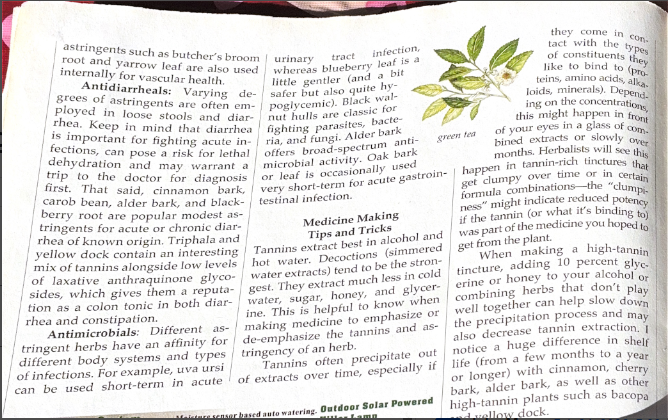
Summary of the Continuation of “Medicine Chest: Astringent Herbs” Article from The Herb Quarterly (by Maria Noël Groves)
This final section of the article expands on specific therapeutic uses of astringent herbs and provides practical medicine-making advice.
Additional Therapeutic Uses
- Vascular Health (Internal): Butcher’s broom root and yarrow leaf are used internally to support blood vessel tone and circulation.
- Antidiarrheals: Mild-to-moderate astringents help tighten the gut in loose stools or diarrhea (always rule out serious infection or dehydration first). Popular choices include cinnamon bark, carob bean, alder bark, and blackberry root. Triphala and yellow dock combine tannins with gentle laxative compounds, making them useful colon tonics for both diarrhea and constipation.
- Antimicrobials: Different astringents target specific infections: • Uva ursi – short-term for acute urinary tract infections • Blueberry leaf – gentler alternative (also mildly hypoglycemic) • Black walnut hulls – classic for parasites, bacteria, and fungi • Alder bark – broad-spectrum antimicrobial • Oak bark or leaf – very short-term for acute gastrointestinal infections
Medicine-Making Tips & Tricks
Tannins extract best in alcohol and hot water (decoctions are strongest). They extract poorly in cold water, sugar, honey, or glycerine—useful when you want to reduce astringency.
Tannins often precipitate out over time (forming clumps) when they bind to proteins, alkaloids, minerals, or other constituents. This can happen quickly in blended extracts or slowly in tinctures and may reduce potency.
Pro tips to improve stability and shelf life:
- Add 10% glycerine or honey to high-tannin tinctures.
- Combine with herbs that “don’t play well” with tannins.
- This dramatically extends shelf life (from a few months to a year+) for plants like cinnamon, cherry bark, alder bark, bacopa, and yellow dock.
Overall Takeaway (for the entire Astringent Herbs article series) Astringent herbs—driven by tannins and polyphenols—are everyday tonics that tighten and tone tissues, reduce leakage, support circulation, fight mild infections, and help with diarrhea. Choose gentle rose-family herbs, nettle, yarrow, or polyphenol-rich berries for safe daily internal use. Reserve stronger ones (witch hazel, oak bark, horse chestnut) for topical applications only. With smart extraction and formulation tricks, you can easily make stable, effective herbal preparations at home. Always use common sense with serious symptoms (heavy bleeding, dehydration, infections) and consult a healthcare provider when needed.